
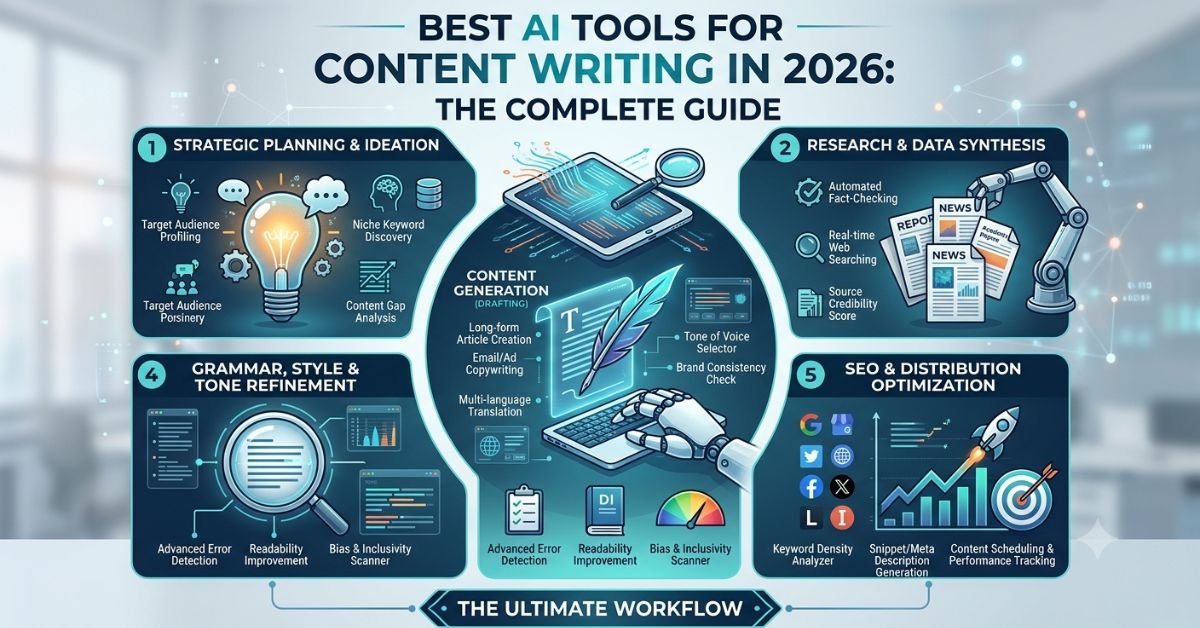
If you’ve been searching for the best AI tools for content writing in 2026, you’re not alone. Marketers, bloggers, freelancers, and content teams worldwide are racing to find tools that actually deliver — not just ones that promise the moon and produce mediocre drafts.
The AI writing landscape has matured significantly. We’re past the early days of clunky templates and generic output. Today’s top tools offer brand voice training, real-time SEO optimization, workflow automation, and multi-channel content generation. But with dozens of options available, choosing the right one can feel overwhelming.
This guide cuts through the noise. We’ve analyzed what’s actually ranking, what real users are saying, and what each tool genuinely does well — so you can make an informed decision without wasting your budget.
What Are AI Content Writing Tools?
AI content writing tools are software platforms that use large language models (LLMs) to help users generate, edit, optimize, and repurpose written content. They’re used by marketers, bloggers, agencies, and content teams to accelerate production without sacrificing quality.
At their core, these tools fall into three distinct categories:
- Content Generators – Take a prompt or brief and produce new text (ChatGPT, Jasper, Writesonic, Claude, Copy.ai)
- Writing Assistants – Work alongside you in real time, catching errors and maintaining style (Anyword, Writer, Grammarly)
- Content Optimizers – Analyze your published or draft content against top-ranking competitors and close the gaps (Surfer AI, Clearscope, Frase)
Understanding which category you actually need is the first step toward picking the right tool.
Why AI Writing Tools Matter in 2026
The numbers speak for themselves. According to industry data, AI SEO tools speed up content creation by an average of 430%, and organizations using AI-assisted workflows report up to 61% higher productivity. The average 500-word blog post takes around four hours to write manually — with AI assistance, that timeline shrinks dramatically.
But here’s what most articles won’t tell you: speed alone isn’t enough anymore. Search has evolved. Content now needs to perform across traditional Google results, AI Overviews, and answer engines. The tools that win in 2026 are the ones built for visibility, not just volume.
How We Evaluated These AI Content Writing Tools
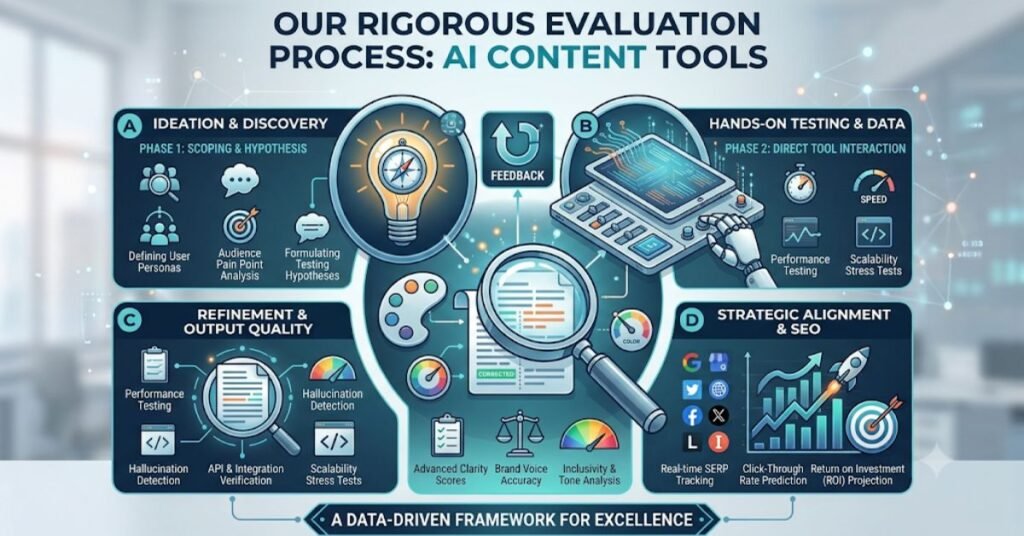
Before listing the tools, here’s what we looked at:
- Content quality and accuracy — Does it produce natural, accurate, original output, or generic filler?
- SEO and brand voice features — Can it optimize for search intent and maintain a consistent voice?
- Ease of use — Is it usable by non-technical writers, or does it require a steep learning curve?
- Pricing and free tier availability — What does it actually cost, including hidden add-ons?
- Integration with CMS and other tools — Does it fit into your existing workflow?
AI Content Writing Tools: Quick Comparison Table
| Tool | Best For | Free Plan | Starting Price | SEO Features |
|---|---|---|---|---|
| ChatGPT | General writing & ideation | Yes | $20/month (Plus) | Basic (via plugins) |
| Claude | Long-form, natural writing | Yes | $20/month (Pro) | Moderate |
| Jasper | Marketing teams & brand voice | No (7-day trial) | $59/month | Strong (Surfer integration) |
| Writesonic | SEO blogs & budget users | Yes | ~$16/month | Strong (built-in) |
| Copy.ai | Short-form & conversion copy | Yes (2,000 words/mo) | $49/month | Moderate |
| Surfer AI | Content optimization | No | $99/month | Best-in-class |
| Frase | SEO briefs & optimization | No | $15/month | Strong |
| Rytr | Budget solo writers | Yes | $7.50/month | Basic |
| Anyword | Ad copy & performance scoring | No | $49/month | Moderate |
| Google Gemini | Google Workspace users | Yes | $20/month (Advanced) | Basic |
The 10 Best AI Tools for Content Writing in 2026
1. ChatGPT (OpenAI) — Best for Versatility and Ideation
ChatGPT remains one of the most widely used AI writing tools in the world — and for good reason. It’s flexible, capable, and accessible. Whether you’re drafting a blog post, writing a cold email, generating social captions, or brainstorming headline ideas, ChatGPT handles it all without locking you into rigid templates.
The GPT-4o model (available on the Plus plan) delivers noticeably stronger output than the free version. It can understand nuanced instructions, maintain context over long conversations, and adapt its tone based on your prompts.
Where it shines: Ideation, drafting, rewriting, creative flexibility, and one-off tasks where you want full control of the direction.
Where it falls short: No native SEO features, no built-in brand voice memory across sessions, and output quality depends heavily on how well you prompt it.
Pricing:
- Free tier available (GPT-4o limited)
- ChatGPT Plus: $20/month
- ChatGPT Team: $30/user/month
Best for: Freelancers, bloggers, and anyone who wants a highly capable general-purpose AI writing assistant.
2. Claude (Anthropic) — Best for Long-Form, Natural Writing
Claude has earned a strong reputation for producing content that actually sounds human. Where many AI tools default to a flat, generic tone, Claude maintains nuance, adjusts to audience context, and handles complex research-heavy writing tasks with impressive coherence.
In 2026, Claude is widely regarded as one of the best choices for extended articles, reports, thought leadership pieces, and anything where voice and depth matter. It’s particularly strong at following detailed prompts and sticking to editorial guidelines.
Where it shines: Long-form content, natural tone, nuanced writing, complex research tasks, and maintaining voice consistency across extended pieces.
Where it falls short: Limited native SEO tooling compared to dedicated platforms; best paired with a separate SEO tool.
Pricing:
- Free tier available
- Claude Pro: $20/month
- Claude Team: $30/user/month
Best for: Writers who prioritize quality and naturalness over built-in marketing templates.
3. Jasper — Best for Marketing Teams at Scale
Jasper is the closest thing to a full-stack AI content platform for marketing teams. In 2026, it’s organized around three layers: purpose-built marketing agents (for SEO, campaigns, and research), content pipelines for scaled execution, and Jasper IQ — a context layer that stores your brand voice, style guides, and audience profiles.
The result is that every piece of content generated by your team stays on-brand automatically — even at high volume. Major brands like Adidas, L’Oréal, and HarperCollins have used Jasper to generate thousands of product descriptions and articles in compressed timeframes.
Where it shines: Brand voice consistency, campaign workflows, team collaboration, and 50+ marketing-specific templates covering ads, emails, blog posts, and social posts.
Where it falls short: No free plan (only a 7-day trial), premium pricing that can feel steep for solo writers, and Surfer SEO requires a separate subscription for advanced optimization.
Pricing:
- Creator plan: $39/month (annual billing)
- Pro plan: $59/month (annual billing)
- Business plan: Custom pricing
- Note: Full SEO optimization requires an additional Surfer SEO subscription starting at $99/month
Best for: Marketing teams, agencies, and businesses publishing content at scale who need brand voice consistency across channels.
4. Writesonic — Best for SEO Content on a Budget
Writesonic strikes a compelling balance between SEO capability and affordability. Its AI Article Writer tool combines keyword analysis, competitor research, and search intent alignment into a guided multi-step process. You input your target keyword, and the tool researches the top-ranking articles, suggests structure, and produces a first draft built to rank.
The platform also includes an SEO audit feature, a Google Docs-style editor, and Surfer SEO integration — making it one of the most SEO-comprehensive tools outside of dedicated optimization platforms.
Where it shines: SEO blog content, long-form article creation, built-in competitor analysis, and content strategies grounded in real search data.
Where it falls short: Less polished than Jasper for pure brand voice work; the volume of features can feel overwhelming at first.
Pricing:
- Free tier available
- Individual plan: ~$16/month (annual billing)
- Standard plan: ~$79/month
- Enterprise: Custom
Best for: Bloggers, content marketers, and small teams who want Jasper-level features without the premium price tag.
5. Copy.ai — Best for Short-Form and Conversion Copy
Copy.ai has evolved significantly beyond its origins as a headline and tagline generator. In 2026, it functions more like a marketing workflow automation platform. Its Blog Wizard walks you through content creation step by step, while its short-form tools generate ad copy, email subject lines, product descriptions, and CTAs with notable speed and quality.
It’s particularly popular in e-commerce and fintech for producing compliant, clear messaging quickly. The free tier is genuinely useful — 2,000 words per month with access to core features.
Where it shines: Short-form copy, marketing automation, email sequences, ad copy, and ease of use for beginners.
Where it falls short: Not optimized for long SEO workflows; less ideal for detailed, research-heavy articles.
Pricing:
- Free: 2,000 words/month
- Starter: $49/month
- Advanced: $249/month
Best for: E-commerce brands, performance marketers, and beginners who need fast, conversion-focused copy.
6. Surfer AI — Best for Content That Actually Ranks
If ranking in Google is your primary goal, Surfer AI deserves serious attention. Rather than starting with a blank page, Surfer analyzes the top-ranking pages for your target keyword and builds a content brief around what’s actually working in the SERPs. It identifies optimal word count, recommended headings, NLP-driven keyword suggestions, and content structure — then helps you write to those specifications.
The result is content that’s engineered to compete, not just exist.
Where it shines: SERP-driven content creation, NLP keyword optimization, content scoring, and closing content gaps against competitors.
Where it falls short: Not a standalone writing tool — works best when combined with a content generator; pricing adds up when combined with Jasper.
Pricing:
- Essential: $99/month
- Scale: $219/month
- Enterprise: Custom
Best for: SEO professionals, content agencies, and teams for whom search performance is the primary KPI.
7. Frase — Best for Content Briefs and Research
Frase sits at the intersection of content research and AI writing. It analyzes the top-ranking pages for any keyword, extracts the questions your target audience is asking, and builds detailed content briefs in minutes. Writers then use those briefs to produce content that answers real search intent — not just surface-level queries.
In 2026, Frase has expanded its AI writing capabilities while maintaining its edge in content intelligence. It’s a strong choice for teams that want to plan content strategically before drafting.
Where it shines: Content briefs, SERP analysis, question research, and helping writers understand search intent before they begin.
Where it falls short: AI writing quality is solid but not best-in-class for creative or long-form narrative content.
Pricing:
- Solo: $15/month
- Basic: $45/month
- Team: $115/month
Best for: Content strategists, SEO writers, and teams who want to research first, write second.
8. Rytr — Best for Budget-Conscious Solo Writers
If you’re a solo creator or freelancer working with limited resources, Rytr delivers surprising value. At $7.50/month on annual billing, it’s one of the most affordable AI writing tools in the market — and it covers the basics well. You get 40+ use cases, 20+ tones, and support for 30+ languages.
Rytr won’t replace Jasper or Surfer for enterprise workflows, but for someone who needs help drafting blog posts, emails, and social captions without a premium subscription, it’s hard to beat the price-to-value ratio.
Where it shines: Affordability, simplicity, and covering everyday writing tasks without a learning curve.
Where it falls short: Limited brand voice customization, no advanced SEO features, and not built for team workflows.
Pricing:
- Free: 10,000 characters/month
- Saver: $7.50/month
- Unlimited: $24.16/month
Best for: Freelancers, solo bloggers, and small business owners who need an affordable writing assistant.
9. Anyword — Best for Performance-Driven Ad Copy
Anyword’s differentiator is predictive performance scoring. Rather than just generating copy and hoping for the best, Anyword scores each piece of AI-generated text based on how likely it is to perform with your specific target audience. This makes it particularly valuable for performance marketers running paid ads, landing pages, and email campaigns.
If you’re spending money on traffic, Anyword helps ensure your copy converts before you put budget behind it.
Where it shines: Ad copy, landing pages, email campaigns, predictive scoring, and performance-focused marketing content.
Where it falls short: Less versatile than ChatGPT or Claude for general content; pricing reflects its enterprise positioning.
Pricing:
- Starter: $49/month
- Data-Driven: $99/month
- Business: Custom
Best for: Performance marketers, growth teams, and anyone where conversion rate is the key content metric.
10. Google Gemini — Best for Google Workspace Integration
Google Gemini (formerly Bard) has become a capable AI writing assistant, particularly for teams already embedded in the Google ecosystem. It integrates natively with Google Docs, Gmail, Sheets, and Slides which means you can generate and refine content without leaving your existing workflow.
Gemini’s real-time web grounding is a notable advantage: it can reference current information when generating content, reducing the risk of outdated facts in your drafts.
Where it shines: Google Workspace integration, real-time web access, Gmail drafting, and document summarization.
Where it falls short: Not purpose-built for marketing content or SEO workflows; lacks the template depth of tools like Jasper.
Pricing:
- Free tier available
- Gemini Advanced: $20/month (part of Google One AI Premium)
Best for: Teams already using Google Workspace who want AI writing assistance without switching platforms.
How to Choose the Right AI Content Writing Tool
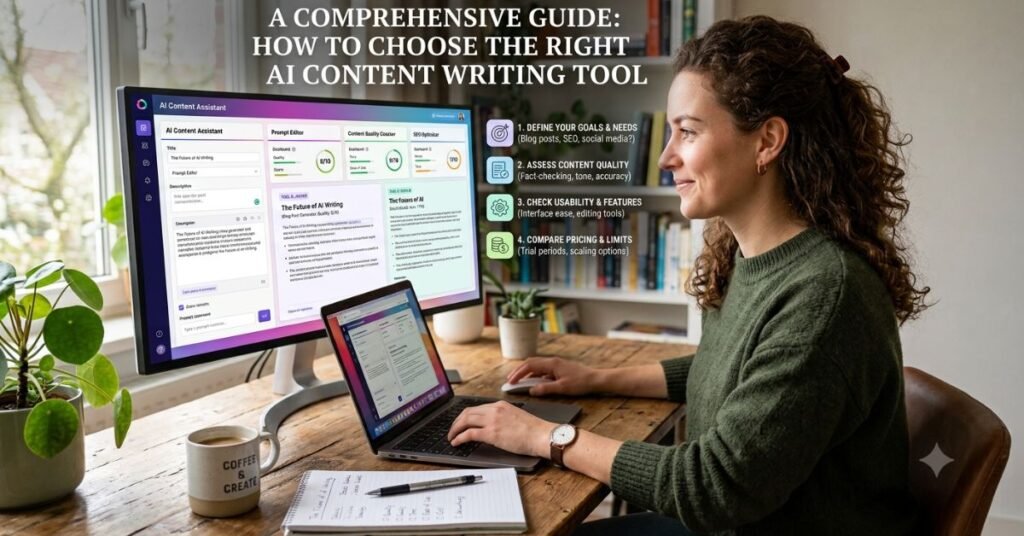
With this many options, the right choice comes down to your specific situation. Here’s a practical framework:
Match the Tool to Your Content Type
| Content Type | Recommended Tool |
|---|---|
| Long-form blog posts (SEO) | Writesonic or Surfer AI |
| Marketing copy at scale | Jasper |
| Ad copy & landing pages | Anyword |
| Short-form & conversion copy | Copy.ai |
| Natural, nuanced writing | Claude |
| General-purpose drafting | ChatGPT |
| Budget-friendly blogging | Rytr |
Consider Your Team’s Technical Skill Level
If your team includes non-technical writers, ease of use matters as much as feature depth. Copy.ai and Rytr have the gentlest learning curves. Jasper requires more setup but rewards that effort with consistency. Surfer AI and Frase assume familiarity with SEO concepts.
Evaluate Brand Voice Customization
If you’re producing content at volume across multiple channels, brand voice consistency is non-negotiable. Jasper is the clear leader here with its brand memory system. Claude and ChatGPT can maintain voice with careful prompting, but they don’t store it between sessions the way dedicated platforms do.
Check for Hidden Costs
Several tools require add-on subscriptions to unlock their best features. Jasper’s SEO optimization needs a separate Surfer subscription ($99+/month). Factor these in before comparing sticker prices. What looks like a $59/month tool can become $158/month in practice.
Challenges of AI Content Creation (And How to Address Them)
Even the best AI tools come with limitations. Being aware of them helps you use AI more effectively:
Limited originality — AI generates content based on patterns in training data. Without human direction, it tends toward the generic. The fix: provide detailed context, your own perspective, and original examples.
Tone inconsistency — Maintaining a consistent brand voice across sessions requires either a dedicated brand voice feature or careful prompt engineering.
Factual reliability — AI can confidently state inaccurate information. Always fact-check statistics, dates, and specific claims before publishing.
SEO surface-level treatment — Most AI tools stuff relevant terms without understanding true search intent. Pair your writing tool with a dedicated SEO optimizer for content that genuinely ranks.
Authenticity — Search engines and audiences increasingly reward content with real expertise and experience (E-E-A-T). Use AI as a production tool, not a substitute for expertise.
How to Create Content With AI Tools: Step-by-Step
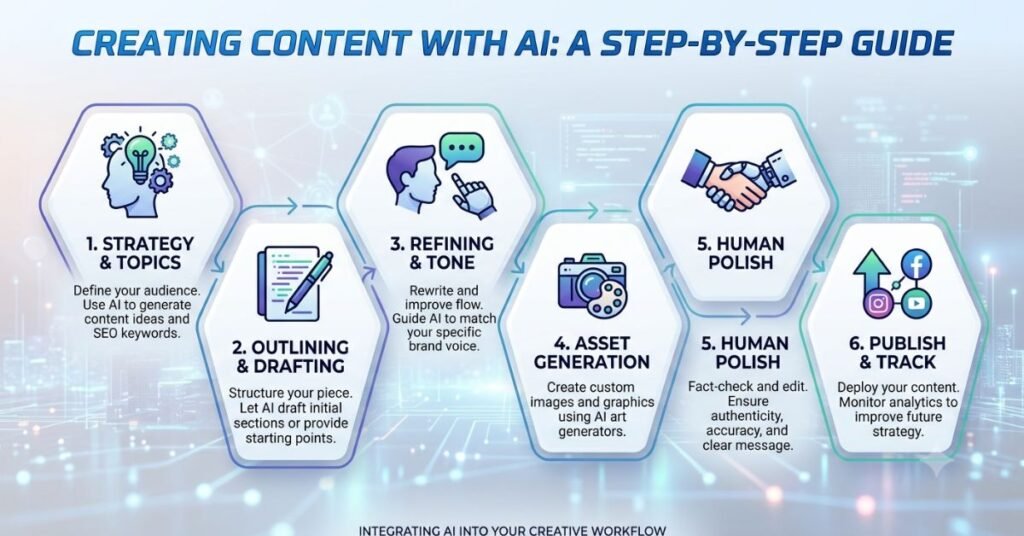
Getting good output from AI writing tools isn’t automatic. Here’s a workflow that consistently produces better results:
- Define your audience — Before you prompt anything, know who you’re writing for, what they already know, and what problem you’re solving.
- Research your keyword and SERP — Use Frase, Surfer, or even free tools to understand search intent and what the top-ranking pages cover.
- Build a detailed brief — Include your target keyword, audience, tone, key points to cover, and any information the AI needs to stay accurate.
- Generate, don’t transcribe — Treat the AI’s first draft as raw material. Read it critically, fact-check it, add your own expertise, and rewrite sections that feel generic.
- Optimize before publishing — Run your draft through an SEO optimizer to check keyword coverage, readability, and content completeness.
- Add what AI can’t — Personal anecdotes, original opinions, data from your own experience, and cultural nuance are what set your content apart.
Conclusion
The best AI tool for content writing in 2026 isn’t a single answer — it’s a match between your needs and what a specific tool does well.
If you’re a solo creator on a budget, Rytr or the free tier of Copy.ai gets you started. And building an SEO-driven content operation, Writesonic or Surfer AI should be in your stack. If you lead a marketing team publishing across multiple channels, Jasper’s brand memory and campaign workflows are hard to replace. And if you care most about writing quality and naturalness, Claude consistently outperforms the field.
The real edge in 2026 isn’t having AI do the writing for you. It’s using AI to produce more, faster, while adding the human expertise and perspective that machines simply can’t replicate. That combination — AI efficiency plus human judgment — is what actually ranks, converts, and builds trust with your audience.
Frequently Asked Questions
What is the best AI tool for content writing in 2026?
There’s no single best tool — it depends on your goals. Jasper leads for marketing teams, Surfer AI is best for SEO, Claude excels at natural long-form writing, and Rytr wins on affordability for solo creators.
Are AI writing tools good for SEO?
Yes, when used correctly. Tools like Surfer AI and Writesonic are purpose-built to align content with search intent and keyword optimization. General tools like ChatGPT require pairing with an SEO tool for best results.
Can Google detect AI-written content?
Google focuses on content quality, expertise, and helpfulness rather than flagging AI specifically. Human-edited AI content that demonstrates genuine E-E-A-T (Experience, Expertise, Authoritativeness, Trustworthiness) performs well in search.
Which AI writing tool has the best free plan?
ChatGPT and Claude both offer capable free tiers. Copy.ai provides 2,000 words/month free, and Rytr includes 10,000 characters/month at no cost.
Is Jasper worth the price in 2026?
For marketing teams publishing content daily with brand consistency requirements, yes. For solo bloggers or occasional writers, cheaper alternatives like Writesonic or ChatGPT Plus offer better value for money.
How do AI writing tools help with content marketing?
They accelerate first-draft production, assist with ideation and research, help maintain brand voice at scale, and — when combined with SEO tools — help structure content to rank in search results.
What’s the difference between Jasper and ChatGPT?
Jasper is purpose-built for marketing with brand voice training, 50+ templates, and campaign workflows. ChatGPT is a general-purpose AI assistant that’s more flexible but requires more user effort to produce consistent marketing content.
Can I use AI tools for blog writing without SEO knowledge?
Yes, tools like Writesonic guide you through the SEO process even if you’re not an expert. However, a basic understanding of search intent, keywords, and content structure will significantly improve your results.